
 Oct 09, 2026
Twenty miles of glassy mountain water. Seventy miles of pine-lined shoreline. Zero city-lake crowds. If you're chasing the perfect wakesurf session or just want to drop anchor somewhere quiet, Palisades Reservoir should be at the top of your Idaho boating bucket list.
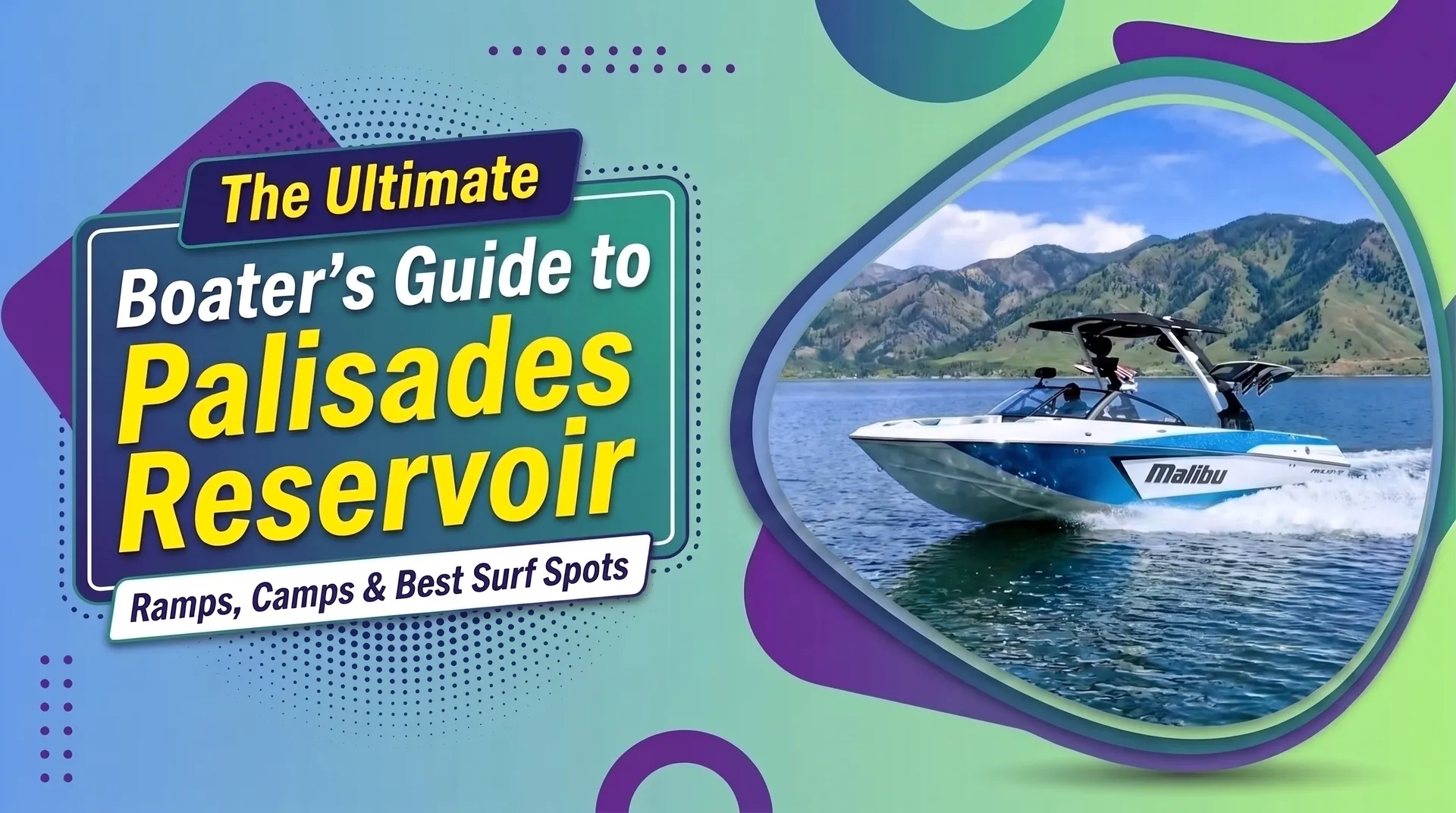
Tucked into the Caribou-Targhee National Forest along the Idaho-Wyoming border, Palisades sits just 55 miles southeast of Idaho Falls off Highway 26 — close enough for a day trip, big enough to disappear into for a week. Whether you're towing a brand-new Malibu, Axis, or Nautique, cruising on a Bennington tri-toon, or carving turns on a Fliteboard e-foil, here's everything you need to know before you launch.
Boat Ramps & Access Points
Palisades is managed by the Bureau of Reclamation as an irrigation and flood-control reservoir, which means water levels shift through the season — peaking in late June and July, then drawing down through late August and September. Picking the right ramp depends on where you're staying and how late in the summer you're launching.
Blowout Boat Ramp
Location: East/north shore, about 6.5 miles southeast of Palisades Dam off Hwy 26 Best for: Mid-lake access, large wakeboats, dual-axle trailers
The second-largest boating facility on the reservoir, Blowout has a wide concrete ramp with plenty of parking for long rigs. It drops straight into the main body of the lake, making it the go-to launch for wakesurfing and tow sports.
Calamity Boat Ramp
Location: North end near Palisades Dam (west side) Best for: Early/late-season launching, sheltered water
Just down from Calamity Campground, this paved ramp puts you right into the deep water near the dam. Because it sits near the deepest part of the canyon, it stays usable longer into the late-summer drawdown than the shallower southern ramps.
Indian Creek Boat Ramp
Location: South end near Alpine, Wyoming Best for: Upper reservoir access, Salt River / upper Snake River inflow
The natural launch point if you're coming from Star Valley or Alpine — concrete ramp, wide-open flats.
McCoy Creek Boat Ramp
Location: Far southern end off Forest Road 087 Best for: Small craft, PWCs, early-season high water
A primitive gravel launch that works great during peak early-summer pool levels. Once the water drops later in the season, bring larger inboard towboats to Blowout or Calamity instead.
Pro tip: Check the USGS/USBR pool elevation for Palisades before heading out in late August. Peak storage elevation runs around 5,620 feet — once levels drop significantly, stick to the main concrete ramps at Blowout or Calamity.
Where to Camp: Lakeside & Canyon Camping
Want to pitch a tent or park the RV and be on the water by sunrise? These Forest Service campgrounds line the shore:
- Blowout Campground — 15 sites (11 single, 4 double) among aspens and pines right above the Blowout launch. First-come, first-served — perfect for early morning launches.
- Calamity Campground — The largest developed complex on the reservoir, with 45 sites across three hillside loops overlooking the lake. Vault toilets, drinking water, fire rings, and reservable through Recreation.gov.
- Big Elk Campground — 1.5 miles off Hwy 26 along Big Elk Creek canyon. Shaded, creek-side, and noticeably cooler on hot July afternoons, with quick access to Big Elk Bay.
- McCoy Creek Campground — 17 primitive, first-come, first-served sites at the southern tail end. Ideal for quiet dry-camping with easy access to lower-lake fishing.
Best Spots for Wakesurfing, Wakeboarding & Glassy Water
With 20+ miles of lake to work with, your ideal spot depends on the wind and time of day.
1. The Dam Arm / Canyon Section (North End)
Steep, pine-covered canyon walls block the prevailing valley wind, making this the spot for early mornings and late evenings. Great for wakeboarding, foiling, and hunting glass.
2. The Mid-Lake Body (Blowout to Big Elk)
Deep, wide-open water with minimal hazards — this is wakesurf central. Malibu Surf Gate, Axis Auto-Wave, and Nautique NSS setups all perform well here, since the deep water lets a fully-ballasted hull pull a clean wave without bottom drag. Best from mid-morning through late afternoon.
3. Big Elk Creek Arm & Coves
Tucked-away pockets for anchoring, swimming, and lunch breaks — a good midday escape when wind picks up on the main lake.
High-Altitude Towboat Setup: What Idaho Boaters Need to Know
Boating at elevation isn't the same as boating at sea level, and Palisades — sitting around 5,600 feet — will expose any towboat that isn't dialed in.
Propeller Tuning for Altitude
Naturally aspirated engines lose roughly 3–4% of their horsepower for every 1,000 feet of elevation gain. Run heavy factory ballast plus add-on bags on a Malibu, Axis, or Nautique, and that power loss adds up fast.
The fix: Pitch down your propeller. A high-torque, altitude-tuned prop (Acme's torque-optimized options are a favorite) gets a heavy towboat on plane quickly without lugging the engine — the difference between a clean wave and a frustrating morning on the water.
Invasive Species Rules You Can't Skip
- Idaho Invasive Species Sticker: Required on every motorized and non-motorized craft launching in Idaho waters.
- Inspection stations: Towing in from Wyoming through Alpine? You're required to stop at mandatory AIS inspection stations along Hwy 26. Pull your drain plugs, clean the hull, and dry your ballast tanks before you reach the ramp — it'll save you time at the checkpoint.
Ready for Your Trip? Let Idaho Water Sports Get You Lake-Ready
A great day at Palisades starts before you ever hit the ramp. Our team handles the details so you don't have to:
- High-altitude propeller swaps and tuning
- Full seasonal service and inspections
- Wakesurfers, boards, and vests
- Fliteboard e-foils and gear
Stop by our Idaho Falls, Nampa, Burley, or McCall locations, or contact us before your next trip to Palisades — we'll make sure your boat is dialed in for altitude, your gear is ready, and your day on the water goes exactly as planned.
FAQs About Boating at Palisades Reservoir
How far is Palisades Reservoir from Idaho Falls? About 55 miles southeast via Highway 26 — roughly a one-hour drive.
What's the best boat ramp for a large wakeboat? Blowout Boat Ramp handles dual-axle trailers and larger rigs best, with direct access to the main lake body.
Do I need a special permit to boat at Palisades? Yes — an Idaho Invasive Species Fund sticker is required on all watercraft, and boats coming from Wyoming must stop at AIS inspection stations along Hwy 26.
Why does my boat feel underpowered at Palisades? Elevation. At roughly 5,600 feet, naturally aspirated engines lose 3–4% of their horsepower per 1,000 feet of elevation — a high-altitude prop tune fixes most of that performance gap.
When is the best time of year to visit? Late June through July for peak water levels; if you're headed out in late August or September, stick to the deeper ramps at Blowout or Calamity as the reservoir draws down.