 Oct 14, 2026
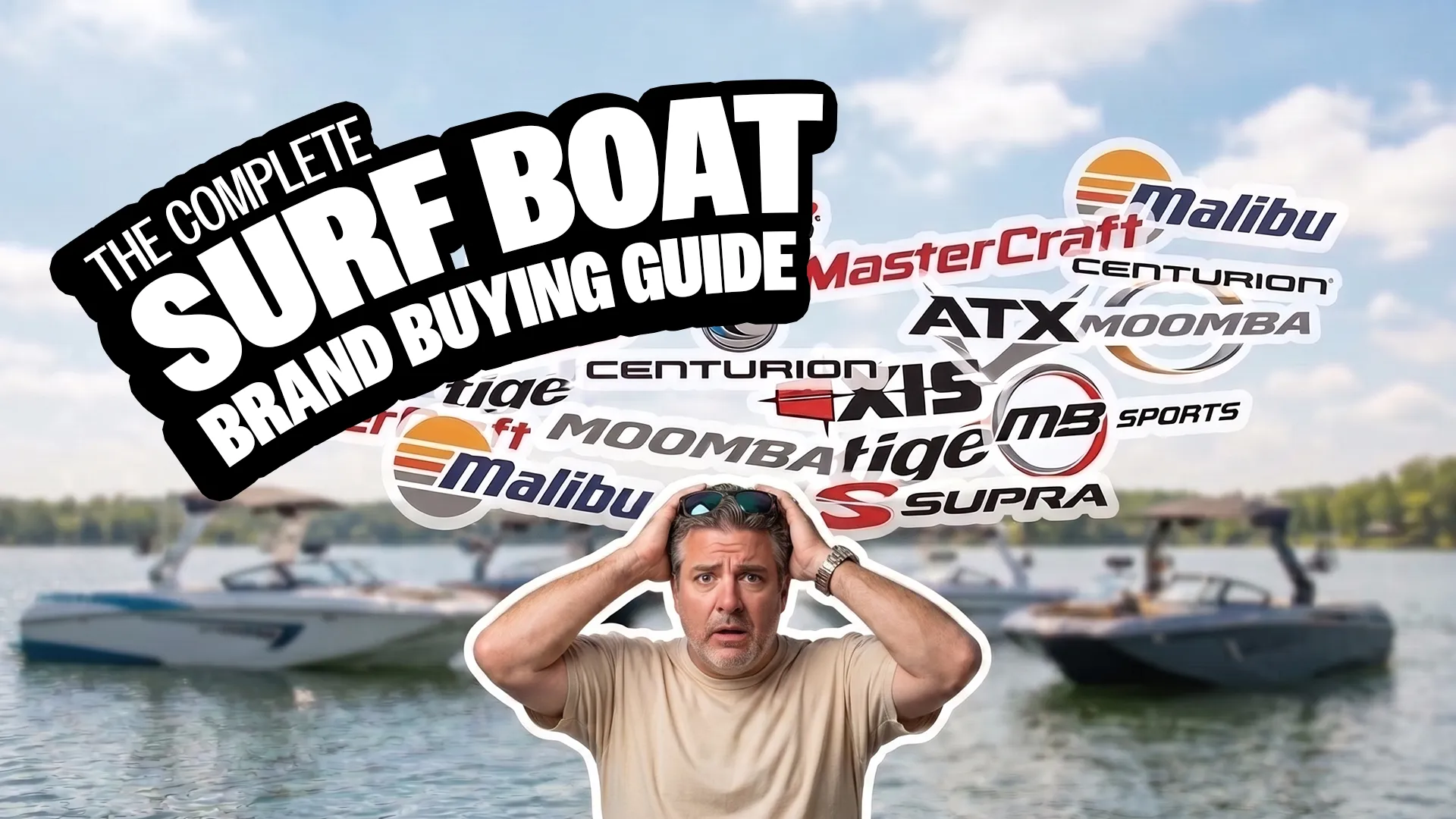
Overwhelmed by options?
Shopping for a wake boat in 2026 means wading through more brands, hull designs, and "proprietary" surf systems than ever before. Nearly every builder now claims to throw the best wave on the water, so it's worth separating the marketing from what actually shows up on the water and in the owner's slip five years from now. Here's an honest rundown of the brands you'll actually cross-shop, what makes each one tick, and where they fall short.
A Quick Word on Surf Systems
Before getting into individual brands, it's worth addressing how boats actually shape their wave.
Most manufacturers on the market rely on some version of trim tabs or downward-deploying plates mounted at the transom. Tab-based systems have genuinely evolved over the last several years — modern versions feature heavy-duty multi-axis actuators, fast-acting software, and sophisticated ballast integration.
However, hydraulic deflection gate systems — namely Malibu's Surf Gate and the Nautique Surf System (NSS) — operate on a different hydro-mechanical principle. Instead of driving a tab downward to create drag and force the boat's running attitude to list, a lateral gate extends outward to redirect the converging water flow behind the hull. This allows the boat to run level and evenly weighted, creating a cleaner wave face across the entire pocket and allowing riders to transfer from side to side in seconds without waiting for plates to retract or ballast to shift.
While tab-based boats can certainly throw great waves, the mechanical advantage of lateral deflectors remains the standard against which top-end wave consistency and rapid switching are measured.
Malibu
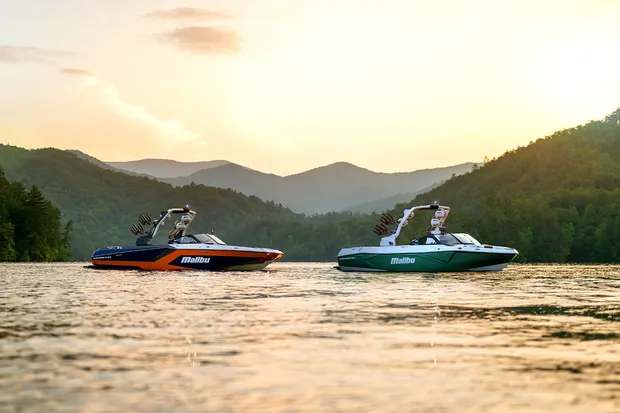
Malibu is the volume leader in the premium segment for a reason. Built on their signature Wake Plus and Diamond hull platforms, Malibu pairs Surf Gate with the Power Wedge III — an adjustable hydrofoil that pulls the transom down to simulate up to 1,500 lbs of additional ballast on the fly. The Wakesetter lineup (especially the 23 LSV) sets the benchmark for interior ergonomics, massive stern lounges, and the intuitive dual-touchscreen Command Center.
Pros: Mature, best-in-class Surf Gate system with instantaneous side-to-side transfers; Power Wedge allows on-the-fly wave steepness tuning without draining water; industry-leading factory warranty and exceptional resale value; massive dealer network. Cons: Premium pricing on flagship M-Series and LSV lines; can feel heavy and fuel-thirsty when running full ballast and aggressive wedge settings.
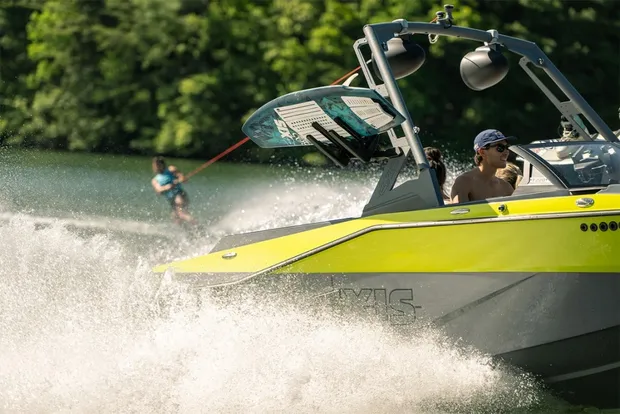
Axis Wake Research
Axis is Malibu's sister brand, built on the same production lines to the same structural standards. It delivers the exact same Surf Gate and Power Wedge performance as a flagship Malibu, stripped of touchscreen automation in favor of durable, tactile toggle switches and analog helm controls. For riders who prioritize raw wave quality, low maintenance complexity, and long-term durability over luxury upholstery flourishes, Axis represents one of the strongest value propositions in the industry.
Pros: Flagship-grade Surf Gate and Power Wedge performance at a substantially lower price; backed by Malibu's engineering, warranty, and dealer support network; simple, bulletproof helm controls; strong resale value for a value-tier boat. Cons: Utilitarian interior styling; fewer creature comforts (manual seat adjustments, basic dash); less interior customization than luxury-tier hulls.
Nautique
Nautique (Correct Craft) carries over a century of boat-building heritage and stands at the absolute pinnacle of luxury fit, finish, and wave displacement. The Nautique Surf System (NSS) uses transom-mounted WAVEPLATES that extend outward to intercept and redirect water flow, paired seamlessly with the NCRS (Nautique Configurable Running Surface) plate. The Super Air Nautique G23 and G25 models are renowned for producing some of the thickest, most powerful waves in the industry.
Pros: Massive, pro-level wave with immense push right out of the box; automotive-grade interior materials, whisper-quiet cabin insulation, and unmatched build rigidity; rider-controlled transfers via Surf Select; top-tier resale retention. Cons: Among the most expensive boats on the water (especially Paragon models); deep-draft, heavy hulls demand substantial tow vehicles and deeper waterways to run safely.
MasterCraft
MasterCraft brings a storied tournament legacy and classic styling. Their current SurfStar system uses heavy-duty, software-integrated trim tabs with position-sensing actuators. MasterCraft is widely recognized for high-end billet aluminum craftsmanship, premium Klipsch audio integration, and distinct hull profiles across their NXT, XT, and XStar lines.
Pros: Intuitive 1-to-10 wave customization software presets; excellent fit-and-finish with premium hardware; strong brand recognition and resale value. Cons: Tab-based system requires precise weight and crew management to optimize wave symmetry; pricing escalates rapidly into X-Series territory without the mechanical simplicity of a lateral gate system.
Centurion
Centurion is laser-focused on dedicated wakesurfing performance. Built around the deep-V Opti-V Hull, Centurion utilizes QuickSurf Pro tab plates paired with the industry-exclusive RAMFILL ballast system, which scoops and fills thousands of pounds of sub-floor water in around 90 seconds while running.
Pros: Exceptionally long, powerful wave with a massive sweet spot; lightning-fast ballast fill and drain times; superior rough-water ride due to the sharp deadrise angle. Cons: Deep-V hull creates a steeper learning curve for shaping beginner wakeboard wakes; helm software and touch interfaces feel slightly less refined than Malibu or Nautique.
Supra
Part of the Skier's Choice family, Supra integrates high-end luxury styling with advanced automation. Their AutoWake technology measures the boat's pitch and roll in real time, automatically adjusting ballast and their Swell Surf tab plates to maintain the ideal running attitude.
Pros: AutoWake takes the guesswork out of crew-weight balancing; standard high-torque Indmar Raptor engines; plush, feature-dense interior layouts. Cons: Uses a trim-tab system rather than lateral gates, requiring more hull trim to dial in; AutoWake pitch-and-roll sensors require occasional recalibration; smaller national dealer footprint.
Tigé
Tigé builds around their Convex V Hull and TAPS 3T trim plate system, managed via the integrated touchscreen GO System. They stand out for bold, aggressive exterior styling and deep, stadium-style cockpit lounges.
Pros: Strong push and clean lip for a tab-based system; versatile hull adapts well to cruising and watersports; standout upholstery design. Cons: Heavy reliance on tab deployment creates noticeable bow rise and engine load under full ballast; resale value trails the big three.
Moomba
Moomba is the entry point into the Skier's Choice family, offering a straightforward, accessible route into modern surf tech. It shares much of the underlying hull geometry and the AutoWake algorithm with Supra, stripped of top-tier luxury amenities.
Pros: Outstanding price-to-performance ratio; standard AutoWake tech in a value-oriented package; durable, easy-to-clean cockpits. Cons: Basic tab plates lack rapid wave-switching capabilities; simpler gelcoat, upholstery, and tower hardware.
ATX Surf Boats
Built in the same Texas facility as Tigé, ATX represents the brand's dedicated value line. Utilizing the TAPS 3T plate system and simplified helm tech, ATX focuses on modern, edgy aesthetics and straightforward surf capability.
Pros: Eye-catching styling; approachable price point; decent wave shape for intermediate surfers. Cons: Requires substantial ballast to generate advanced-level push; noticeable bow rise on takeoff before leveling out.
Supreme
Supreme is the sister value line to Centurion, using modified deep-V hulls paired with QuickSurf tabs.
Pros: Excellent rough-water ride; deep, high-gunwale cockpits that keep passengers dry; long surf pockets. Cons: Lacks Centurion's rapid RAMFILL ballast (relies on traditional pumps); simpler helm controls and interior materials.
Heyday
Owned by Brunswick, Heyday engineered their B-Hull with unique inward-angled transom sponsons designed to displace water naturally without expensive moving plates or complex actuators.
Pros: One of the lowest initial price points for a brand-new inboard boat; simple Mercury powertrains; accessible for first-time buyers. Cons: Minimal on-the-fly wave adjustability; barebones fit-and-finish; softer, less defined wave profile compared to dedicated towboat builders.
MB Sports
MB Sports positions itself toward budget-conscious buyers seeking heavy displacement at a low upfront cost through simple gravity-fill ballast gates.
Pros: Capable of throwing a decent wave when properly weighted; lower initial purchase price than top-tier brands. Cons: High long-term maintenance overhead. Build consistency, wiring harnesses, and component sourcing have historically lagged behind the rest of the industry, often leading to mid-season downtime and unexpected shop visits. When compared against established value brands like Axis, the initial savings are quickly offset by lower build quality, shorter warranty support, and weaker long-term resale retention.
Bottom Line
Every manufacturer on this list approaches wave generation with a distinct engineering philosophy.
Buyers prioritizing instantaneous side-to-side transfers and a level-running hull attitude often lean toward Malibu, Axis, and Nautique due to the fluid dynamics of lateral deflection gates. Meanwhile, those who value automated hull-leveling technology, customizable software profiles, or specific deep-V rough-water handling will find compelling flagship solutions from MasterCraft, Centurion, Supra, and Tigé. For budget-focused buyers, brands like Axis, Moomba, and ATX deliver legitimate surf capability while keeping operational and entry costs manageable.
Because hull shape, helm ergonomics, and local dealer support vary significantly across regions, the best approach is always to schedule a demo with your local Idaho Water Sports. You can find out what boat fits your needs and compare some of the top brands in the industry.