 Oct 09, 2026
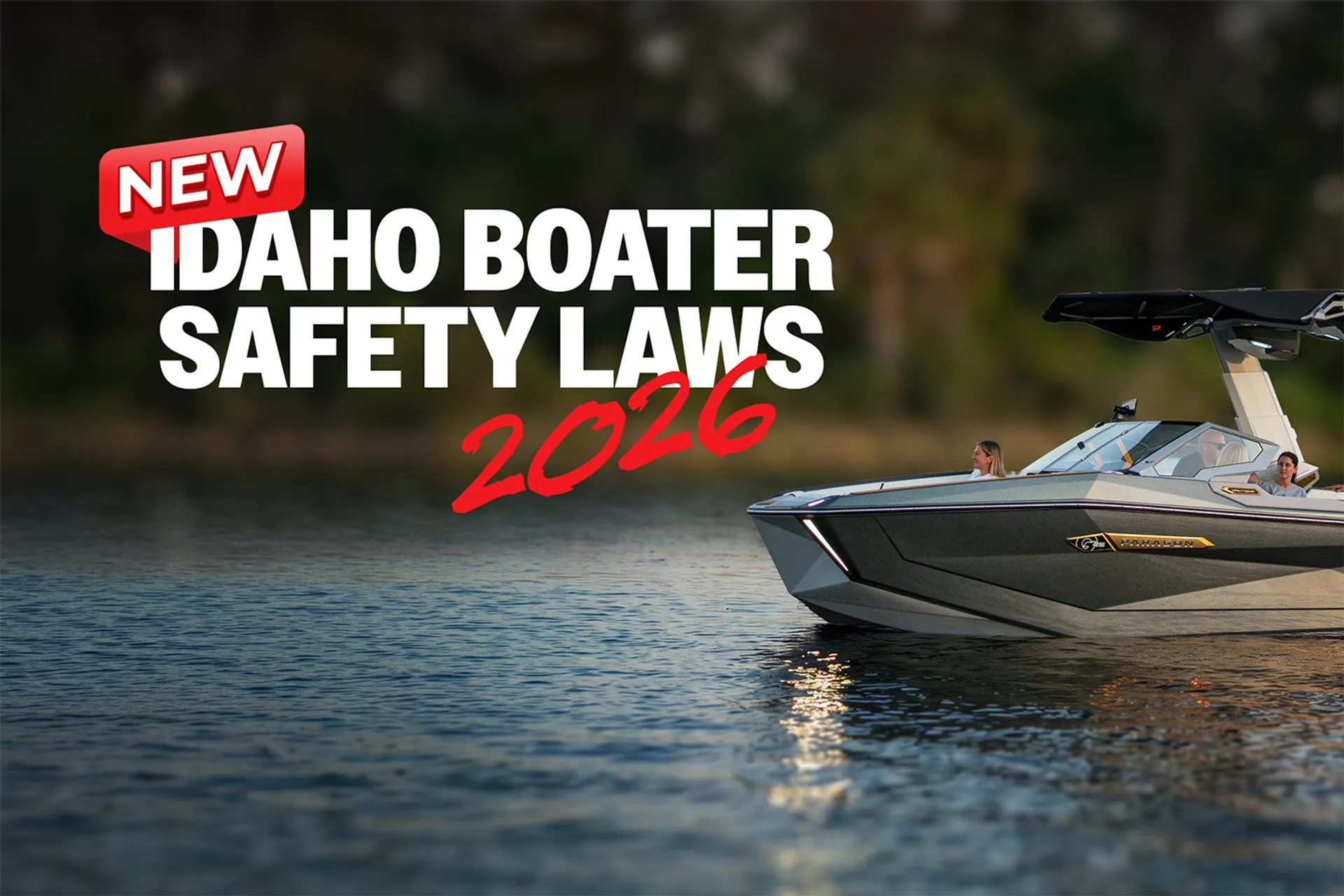
Idaho's boating laws just got a major update, and if you're planning to hit Lake Coeur d'Alene, the Snake River, Lucky Peak, or any of Idaho's hundreds of lakes and reservoirs this season, you need to know what changed. As of July 1, 2026, new legislation reshapes how law enforcement interacts with boaters, updates the rules around towing skiers and tubers, and reaffirms Idaho's safety education and equipment requirements.
At Idaho Water Sports, we live on the water just as much as you do — so we put together this complete, up-to-date guide to Idaho boating laws and regulations for 2026. Whether you're renting a boat or personal watercraft, brushing up before a weekend on the lake, or just want to boat responsibly, here's what you need to know.
Key Idaho Boating Law Changes at a Glance
- Law enforcement now needs reasonable suspicion of a violation before stopping or boarding your vessel.
- A properly mounted rear-view mirror can now replace the required human spotter when towing skiers, wakeboarders, or tubers.
- Idaho still requires a boating safety education certificate in specific situations — including PWC rentals and repeat offenders.
- Age and supervision rules remain in place for operating motorboats and personal watercraft.
- All motorized vessels must be registered with the Idaho Department of Parks and Recreation (IDPR) and carry required safety equipment.
- Boating under the influence (BUI) carries penalties similar to a DUI, and negligent operation can trigger steep civil and criminal penalties.
Below, we break down each of these changes in detail.
Reasonable Suspicion Now Required for Vessel Stops
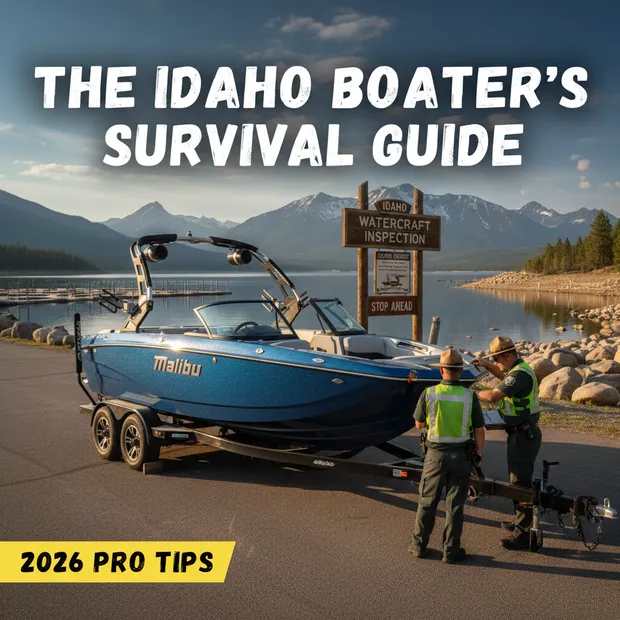
Under House Bill 548, which amends Idaho Code § 67-7028 within the Idaho Safe Boating Act, law enforcement officers must now have reasonable suspicion that a violation has occurred before they can stop and board a vessel to inspect or search it. Previously, deputies and marine patrol officers had broad discretionary authority to stop boats on Idaho waters without any specific cause.
This change brings Idaho's boating enforcement standard closer in line with how stops are handled on the road — officers need a specific, articulable reason (such as suspected impairment, unsafe operation, erratic movement, or a visible equipment violation) before pulling you over on the water. Sheriffs and deputy sheriffs remain the primary enforcers of Idaho's boating laws.
What this means for you: You still need to follow all boating laws — speed limits, safety equipment requirements, registration, and sobriety laws all still apply. The change simply means officers can't randomly stop your boat without cause. If you are stopped, be cooperative; officers must be able to point to a specific reason for the stop.
New Towing & Personal Watercraft Rules: The Mirror vs. Spotter Update
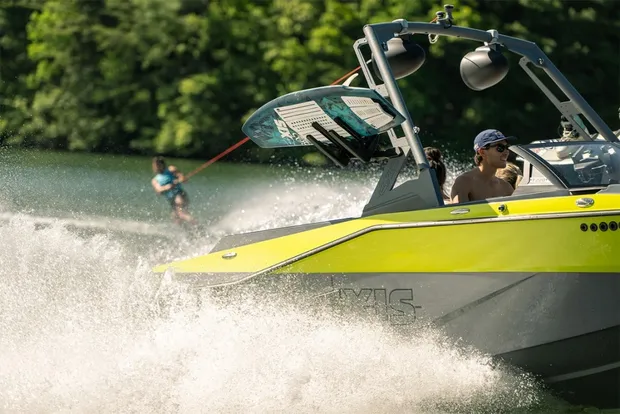
If you're pulling a water skier, wakeboarder, wakesurfer, or tuber behind your boat, Idaho law has traditionally required a second person on board (an observer) to watch the person in the water and signal the driver if they fall. That's changing.
Under the updated law, boats equipped with a properly mounted rear-view mirror — with a minimum reflective area of 78 square inches, positioned so the operator can continuously observe the person being towed — may no longer need a separate spotter. The rule also expands where this mirror-based observation method can be used, beyond just designated slalom courses.
This is good news for solo boaters and smaller crews who love wakeboarding, tubing, and waterskiing on Idaho lakes, but it's important to make sure your mirror setup actually meets the legal specifications before you rely on it in place of a spotter.
Do You Need a Boating Safety Education Certificate in Idaho?
Idaho does not require a blanket, statewide boater education card for every recreational boater — but a boating safety education certificate is mandatory in several important situations:
- Anyone renting a personal watercraft (PWC)
- Operators convicted of boating under the influence (BUI)
- Repeat offenders of Idaho boating laws
Once earned, the certificate is valid for life — there's no need to renew it. You can complete the requirement through:
- A free in-person boating safety class offered around the state
- A free home-study guide you can request from IDPR
- An approved online course through a NASBLA-recognized provider (fees typically apply)
If a repeat offender fails to complete the required safety course, they can face suspension of boating privileges for up to two years. Even if you're not in a category that legally requires the certificate, taking a course is a smart move — many marine insurance providers offer discounts for completed boater safety courses, and it makes you a safer boater on the water.
Age & Supervision Requirements for Boat and PWC Operators
Idaho's age and supervision framework for operating motorized vessels and personal watercraft generally works like this:
- 16 and older: May operate a motorboat with 15 horsepower or more, or a personal watercraft, unsupervised.
- Ages 12–15: May operate such vessels only while under the direct supervision of an adult (18+) who is capable of taking immediate control if needed.
- Under 12: Cannot operate a motorboat of 15 horsepower or greater, even with adult supervision.
- PWC rentals: Regardless of the operator's age, anyone renting a personal watercraft must complete a boating safety course first.
Because some Idaho counties layer on additional local ordinances regarding minimum operator age, it's always smart to double-check county-specific rules for the lake or river system you'll be boating on before you head out — especially on popular waters like Lake Coeur d'Alene, Lake Pend Oreille, and Priest Lake.
Vessel Registration and Required Safety Equipment
Every motorized vessel used principally on Idaho waters must be registered with the Idaho Department of Parks and Recreation. Registration includes an invasive species sticker for Idaho-registered boats, which helps fund the state's efforts to keep destructive species like quagga and zebra mussels out of Idaho waterways. Out-of-state boats need to purchase a separate invasive species sticker before launching in Idaho.
Required safety equipment on Idaho vessels includes:
- Life jackets (PFDs): One U.S. Coast Guard–approved life jacket per person on board, with children under 13 required to wear one whenever the vessel is underway.
- Throwable flotation devices: Required for vessels 16 feet or longer.
- Fire extinguishers: Required depending on vessel size and configuration.
- Ventilation systems: Required for gasoline engines built after July 31, 1980, to prevent fuel vapor buildup.
Idaho's water is cold even in the middle of summer — often hovering around 52°F even during peak boating season — so wearing a properly fitted life jacket isn't just a legal requirement, it's a genuine survival tool if you end up in the water unexpectedly.
Boating Under the Influence (BUI) and Negligent Operation Penalties
Idaho treats impaired boating seriously. Operating a vessel with a blood alcohol concentration (BAC) of 0.08% or higher, or while under the influence of drugs, is illegal — with penalties that mirror Idaho's DUI laws.
Beyond impairment, Idaho law also penalizes unsafe operation:
- Negligent operation that endangers life or property can result in civil penalties of up to $5,000.
- Grossly negligent operation may be charged as a Class A misdemeanor.
- Repeat violations, or operating a vessel after a license or privilege suspension, can carry fines up to $300 and/or up to 30 days in jail.
Bottom line: Idaho's lakes and rivers are meant to be enjoyed, but the state takes reckless and impaired operation seriously to keep everyone on the water safe.
Frequently Asked Questions About Idaho Boating Laws
Do I need a boating license to operate a boat in Idaho? Idaho does not require a general statewide boating license for most recreational operators. However, a boating safety education certificate is required for PWC rentals, boaters convicted of a BUI, and repeat offenders.
Can police stop my boat without a reason in Idaho now? No. As of July 1, 2026, Idaho law enforcement must have reasonable suspicion that a violation has occurred before stopping and boarding a vessel, under House Bill 548.
Do I still need a spotter when towing a tuber or skier in Idaho? Not necessarily. If your boat has a properly mounted rear-view mirror meeting the legal specifications (minimum 78 square inches of reflective area) allowing continuous observation of the person being towed, it can now replace the traditional human spotter requirement.
How old do you have to be to drive a boat in Idaho? Generally, operators must be at least 16 to operate a motorboat of 15 horsepower or more, or a PWC, unsupervised. Ages 12–15 may operate with direct adult supervision, and children under 12 cannot operate such vessels at all. Some counties have additional local restrictions.
What happens if I get a BUI in Idaho? A boating under the influence charge with a BAC of 0.08% or higher carries penalties similar to a DUI, and a BUI conviction also triggers a mandatory boating safety education course requirement.
Do I need an invasive species sticker to boat in Idaho? Yes. All registered Idaho boats include an invasive species sticker as part of registration, and out-of-state boats must purchase a separate sticker before launching on Idaho waters.
Boat Smart, Boat Safe, Boat With Idaho Water Sports
Idaho's lakes and rivers offer some of the best boating, wakeboarding, tubing, and personal watercraft riding in the country — and knowing the rules is the first step to a great day on the water. Whether you're shopping for a new or used boat, need certified service to keep your vessel running safely and legally, or want to stock up on required safety gear like life jackets, fire extinguishers, and towing mirrors from our pro shop, Idaho Water Sports is your local resource for everything boating in Idaho.
With four locations across the state, our team can help you find the right boat for how you actually use Idaho's water — whether that's wakeboarding and tubing behind a properly rigged tow boat, cruising Lake Coeur d'Alene, or fishing the Snake River — and our full-service department keeps your boat, PWC, and safety equipment compliant and lake-ready all season long. Stop by one of our locations or browse our current inventory of new and used boats to get started.
This article is intended as a general summary of Idaho boating law updates and does not constitute legal advice. Boaters should consult the official Idaho Safe Boating Act, the Idaho Department of Parks and Recreation, and any applicable county ordinances for complete and current requirements.